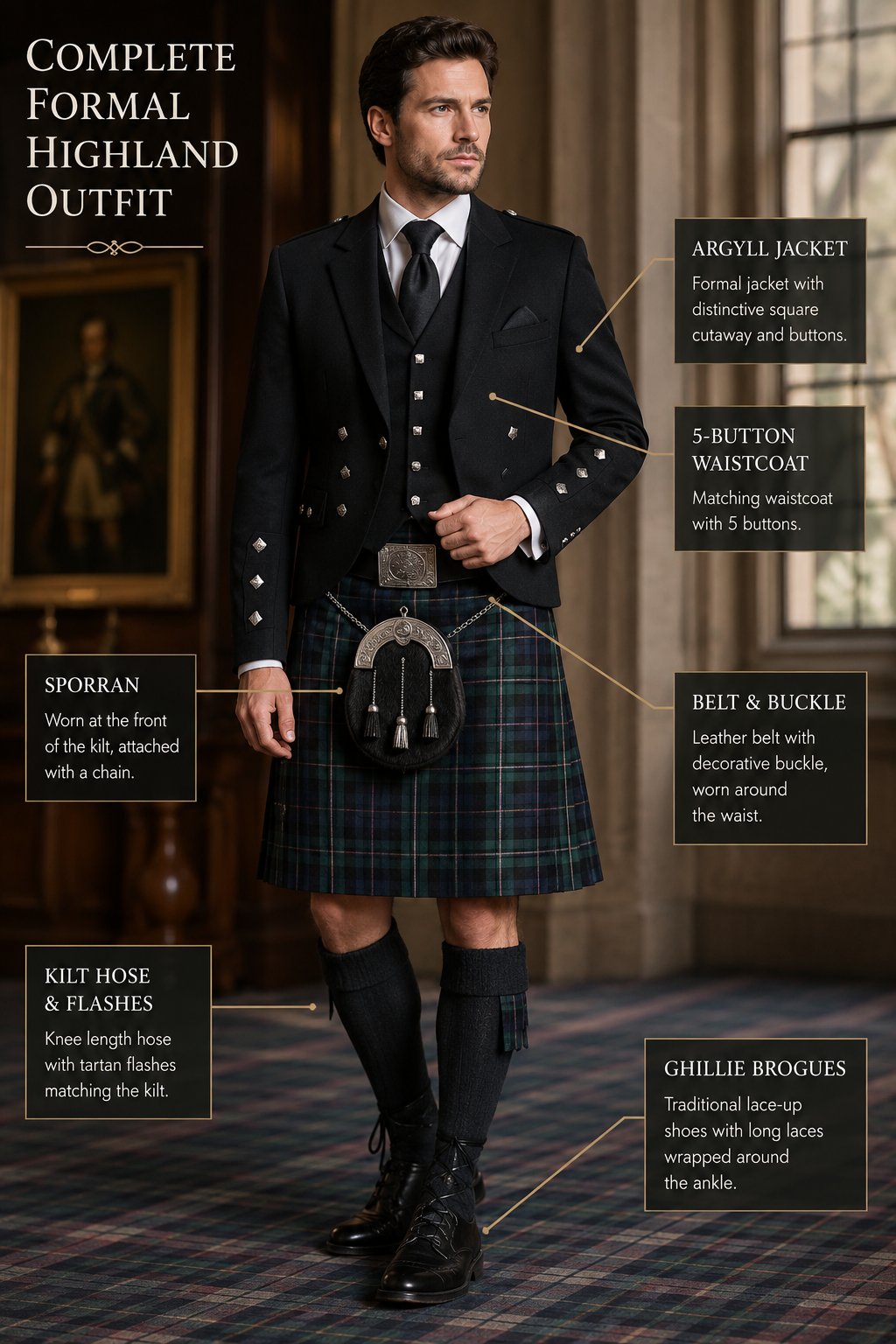
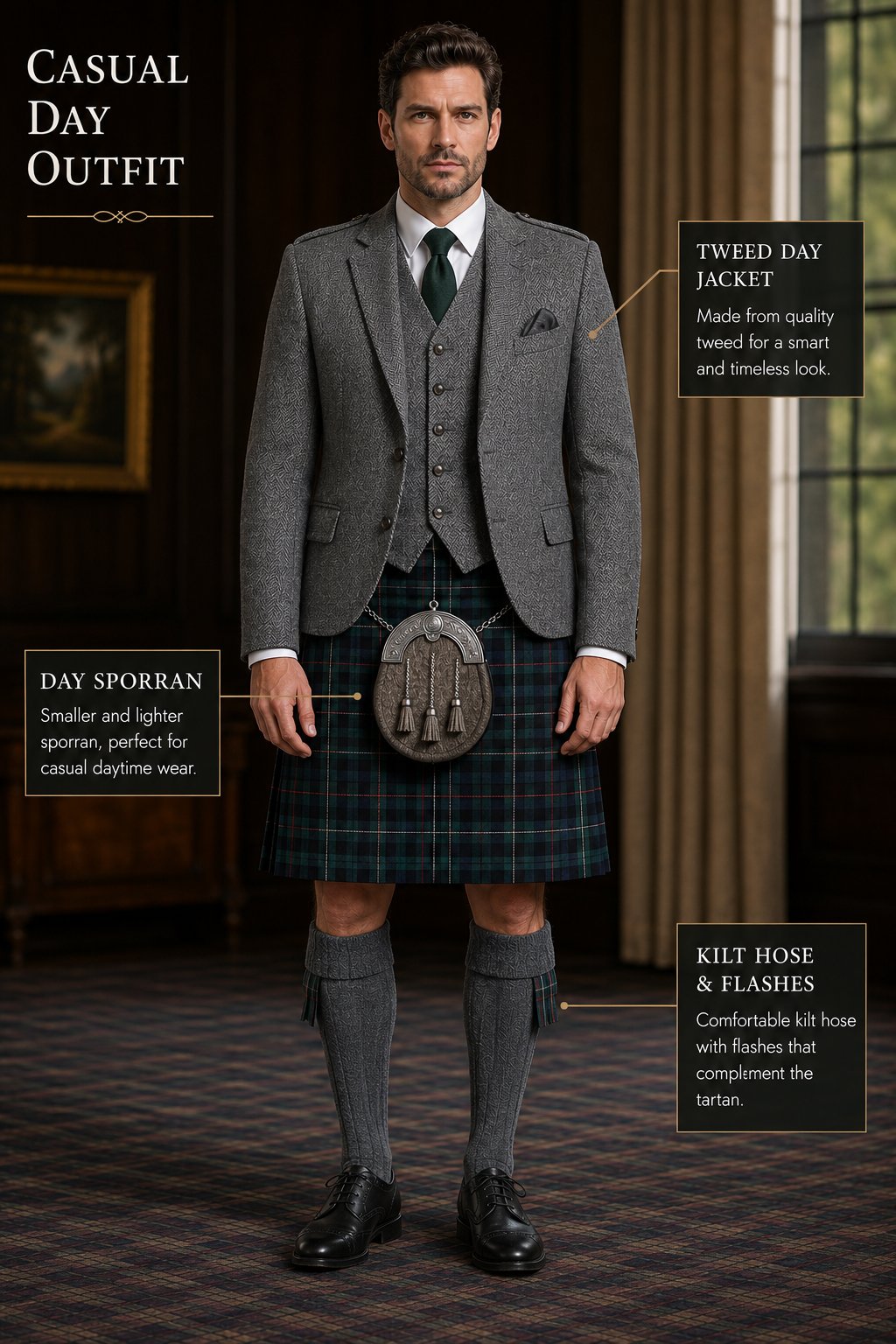
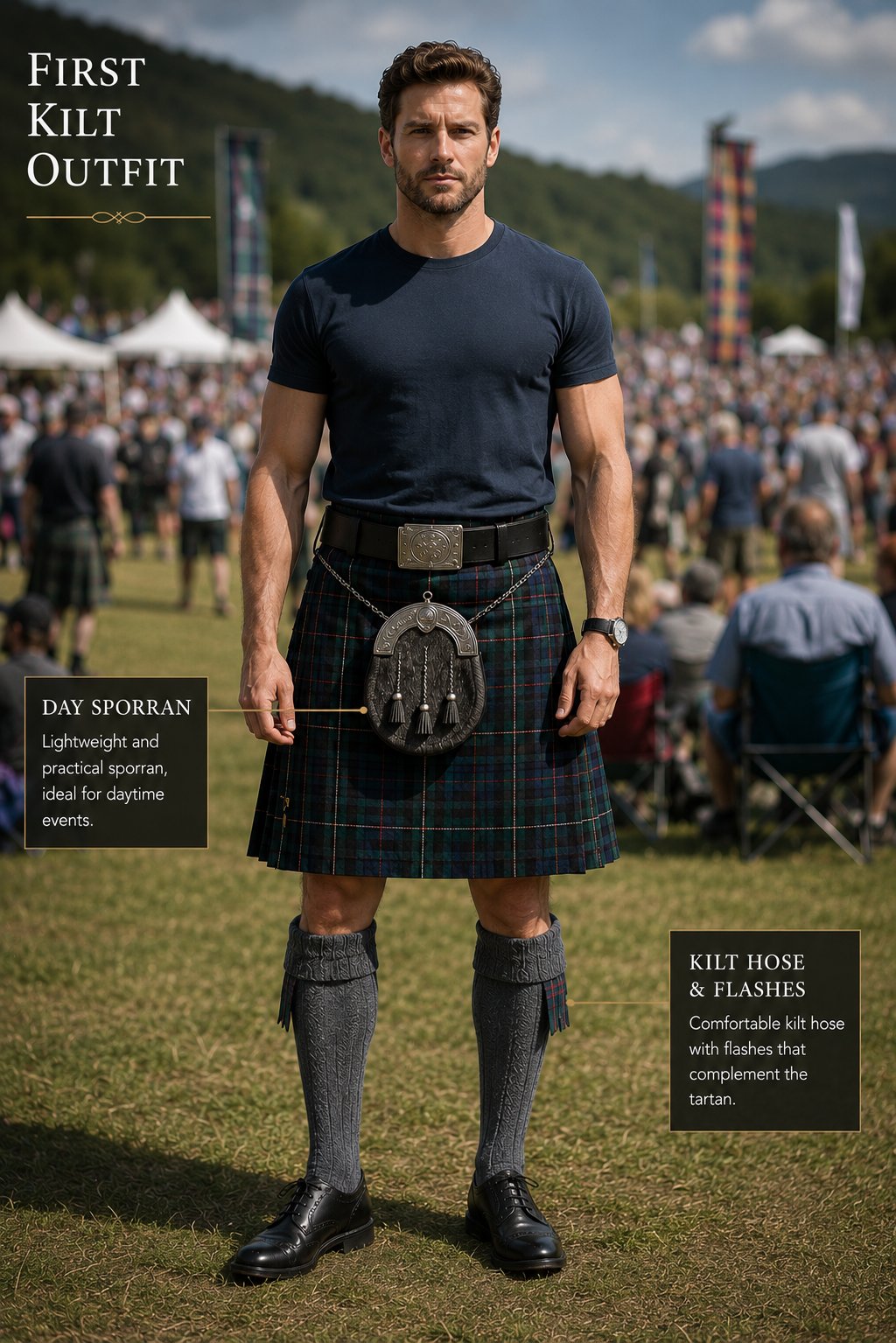
Kit yourself out in Little tartan — kilts and outfits, fabric by the metre, plus scarves, ties and sashes, each made to order in your chosen colourway.
ii.
Custom Orders & Worldwide Shipping
Every Little item is made to order and shipped worldwide, with custom sizing and bulk pricing for clan gatherings, weddings and pipe bands. Contact us for help before you order.
iii.
Choose Your Little Tartan Colourway
Colourways describe the dye, not the age: Modern is vivid, Ancient is mellow, Weathered is muted and Dress is the brighter formal version. All are available for Little tartan.
iv.
Little Tartan Fabric by the Metre
Little tartan material is available by the metre in several weights. Order a swatch to confirm the shade, then buy the length you need for your own project.
v.
Little Tartan for Weddings & Events
Little tartan is a popular choice for weddings, Highland games and family gatherings, with matching pieces for the whole group.
vi.
Little Tartan Kilts & Outfit Packages
Order a made-to-measure Little kilt or full outfit tailored to your measurements. Add a jacket, sporran, belt and hose to finish the look for weddings, ceilidhs and Highland games.

Clan Motto
Magnum in parvo (Great in small things)
Heritage & Identity
Who Wears Little Tartan Tartan?
Worn by Little descendants worldwide, sept families including Lyttle and Lytle bearers, military veterans, and Scottish heritage enthusiasts throughout America, Canada, and Scotland.
Associated Names
Lyttle
Lytle
Littell
Littel
McIlwraith
MacIlwraith
Military Heritage
Associated Regiments
Little warriors served with distinction in Lowland regiments, Border cavalry units, and prestigious military formations, particularly excelling in American colonial service and British Empire campaigns worldwide.
King's Own Scottish Borderers
Cameronians (Scottish Rifles)
Black Watch (Canada)
Royal Scots Fusiliers
Shop Little Tartan Products
Discover authentic Little clan products including traditional kilts, Highland dress accessories, clan badges, tartan ties, scarves, and ceremonial items crafted for descendants across North America.
All Categories
All Styles
All Products
All Prices
Under $50
$50 - $100
$100 - $200
$200 - $500
$500+
Associated Tartans
Your Selected Tartan
Other Associated Tartans
Little Tartan Tartans
0 Variations
Each tartan can feature several variations, with the most common being Ancient, Modern, Weathered, Hunting and Dress.
Loading tartans…
Ancient Tartan
Before 1860, all fabric dyes came from nature — plants, berries, bark, and insects. The colours they produced were softer and more muted than what we're used to today: think mossy greens, dusty sky blues, and reds with a warm, orangey tone. A lot of people actually prefer Ancient tartans for this reason — the gentler contrasts let the pattern breathe and stand out in a way that bolder colours sometimes don't. Worth knowing: the pattern itself, called the sett, is exactly the same across all variations of a tartan. It's only the colours that change.
Modern Tartan
Modern tartans came about after 1860, when chemical dyes replaced natural ones. The difference is pretty striking. Those soft, earthy greens became deep bottle green. Pale blues turned into rich navy. Reds went from warm and muted to full-on scarlet. If you're after something bold and vivid, Modern is usually the one to go for. It's the version most people picture when they think of a classic tartan.
Weathered Tartan
Weathered tartans take their inspiration from what happens to fabric left out in the elements — faded by sun, softened by rain, worn in by time. The colours shift towards olive greens, warm browns, and very pale blues, with reds that fade down to something close to a dusty pink. It's a more rustic, lived-in look, and honestly a really beautiful one. If you want something that feels a little more understated and natural, Weathered is worth a look.
Hunting Tartan
Hunting tartans are essentially the camouflage version of a clan's tartan — greens and browns brought forward so the wearer could move through the landscape without standing out. Not every clan has one, and that's by design. If a tartan is already mostly green or brown (like the Black Watch or Gunn), there's no need to adapt it. But a tartan like the Fraser, which is predominantly red, would make someone very easy to spot in the field — so a Hunting version makes a lot of sense for clans like that.
Dress Tartan
Dress tartans were made for the big occasions — Highland games, celebrations, and traditional dance. The pattern stays the same, but the main colour is swapped out for white, or extra white is woven in to give it a lighter, more formal feel. As you'd expect from the Scots, the rules get bent every now and then — yellow has been used instead of white in some cases, which is exactly how the famously bold MacLeod Dress Modern and Barclay Dress Modern came to be.
The Little Tartan Story
Four centuries of history woven into every thread
The Little clan emerged in Scotland's Border regions during the 12th century, first recorded when William le Litel witnessed charters in Roxburghshire around 1160. These early clan members established themselves as merchants, clerks, and minor landholders along the turbulent Anglo-Scottish frontier. The family weathered centuries of Border warfare, developing the resilient character that would define their descendants. Littles served as witnesses to important medieval documents, indicating their respected status in Border society. Their strategic location between Scotland and England shaped their pragmatic approach to survival and advancement throughout the medieval period.
During the 14th and 15th centuries, Little family members expanded beyond the Borders, establishing branches in Edinburgh, Glasgow, and northern England. Notable clan members included clergy, merchants, and craftsmen who contributed to Scotland's growing urban centers. The family demonstrated remarkable adaptability during the Wars of Scottish Independence, with some branches supporting Scottish independence while others maintained English connections. This pragmatic approach enabled the clan to survive political upheavals that destroyed other Border families. Littles began appearing in university records, indicating their commitment to education and professional advancement.
Where does the name Little Tartan come from?
Little derives from Middle English 'litel' meaning 'small in stature' or as an ironic nickname for someone large. The surname appeared in Scottish records by the 12th century, particularly in Border regions. Early bearers included clerks, merchants, and landholders who adopted this descriptive name. The family spread throughout southern Scotland, establishing themselves in Roxburghshire and later expanding across the English-Scottish frontier regions.
The 16th and 17th centuries saw Littles embrace religious reform and educational opportunities throughout Scotland. Family members supported Presbyterian causes while pursuing careers in law, medicine, and commerce. Notable figures included scholars at Scottish universities and merchants trading with European markets. During the Union of Crowns in 1603, many Littles relocated to London and northern England, establishing successful businesses and professional practices. The clan weathered religious conflicts by maintaining moderate positions and focusing on economic advancement rather than political extremism.
The 18th and 19th centuries marked the Little clan's global expansion, with family members emigrating to North America, Australia, and other British territories. In America, Littles distinguished themselves as pioneers, soldiers, and community leaders from Pennsylvania to the Carolinas. During the American Revolution, clan members served on both sides, reflecting their pragmatic Border heritage. Canadian Littles helped establish communities in Nova Scotia, Ontario, and western provinces. The Industrial Revolution saw Scottish Littles excel in engineering, manufacturing, and finance, contributing to Scotland's economic transformation.
The Little tartan embodies centuries of Scottish heritage, from Border strongholds to international achievement, woven in patterns worn with pride across three nations.
Featured Collections
Craftsmanship defined by tradition, designed for the modern era.