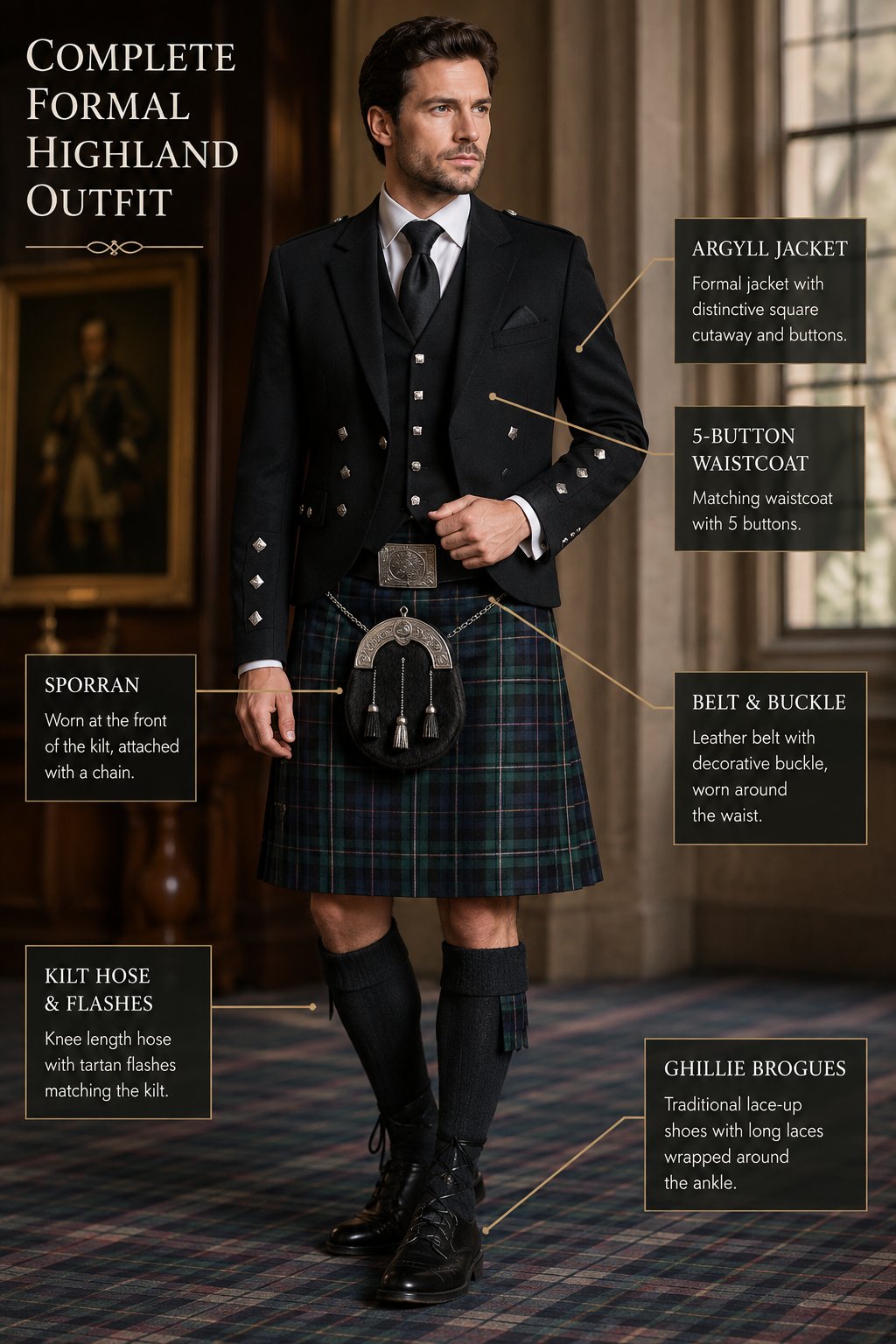
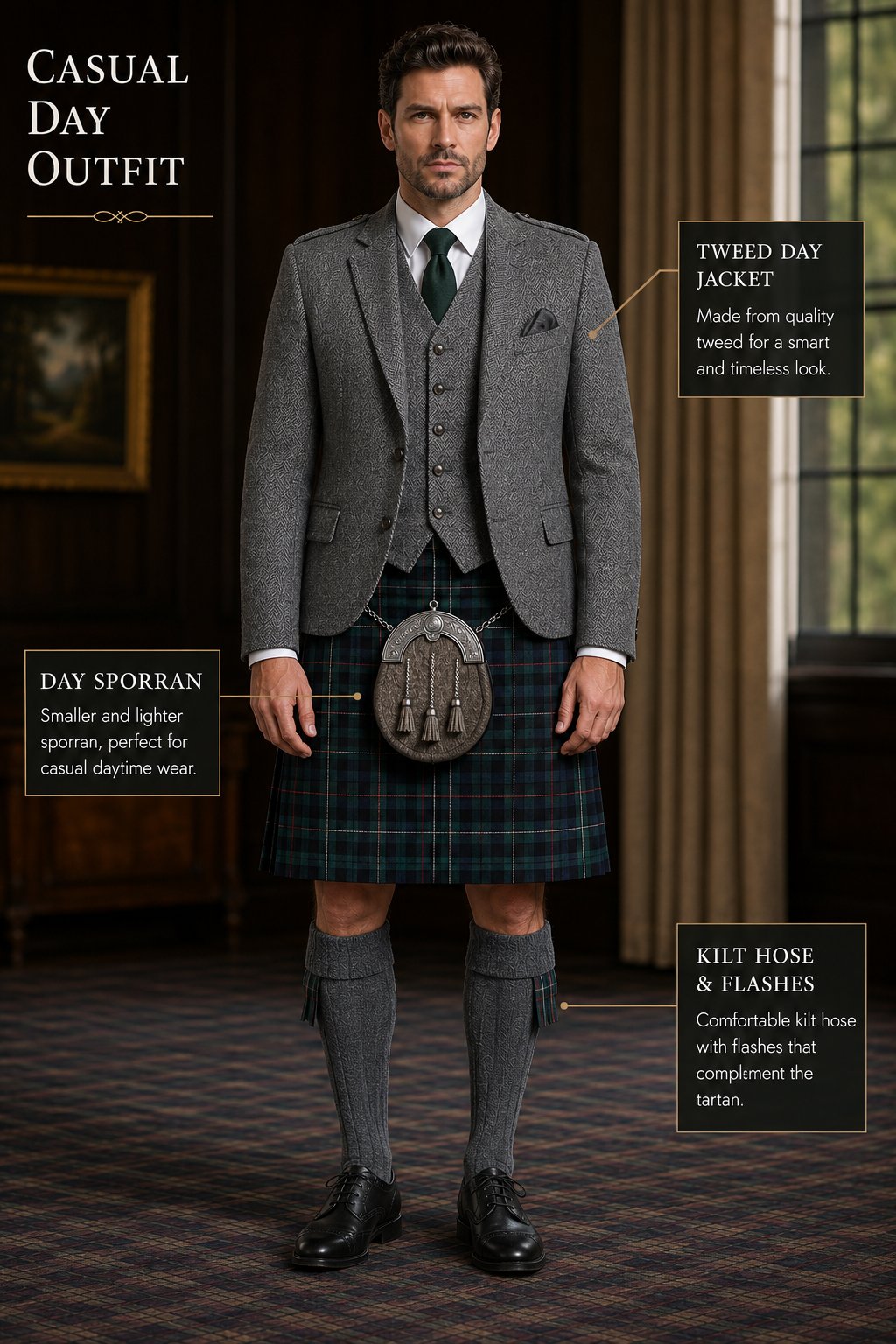
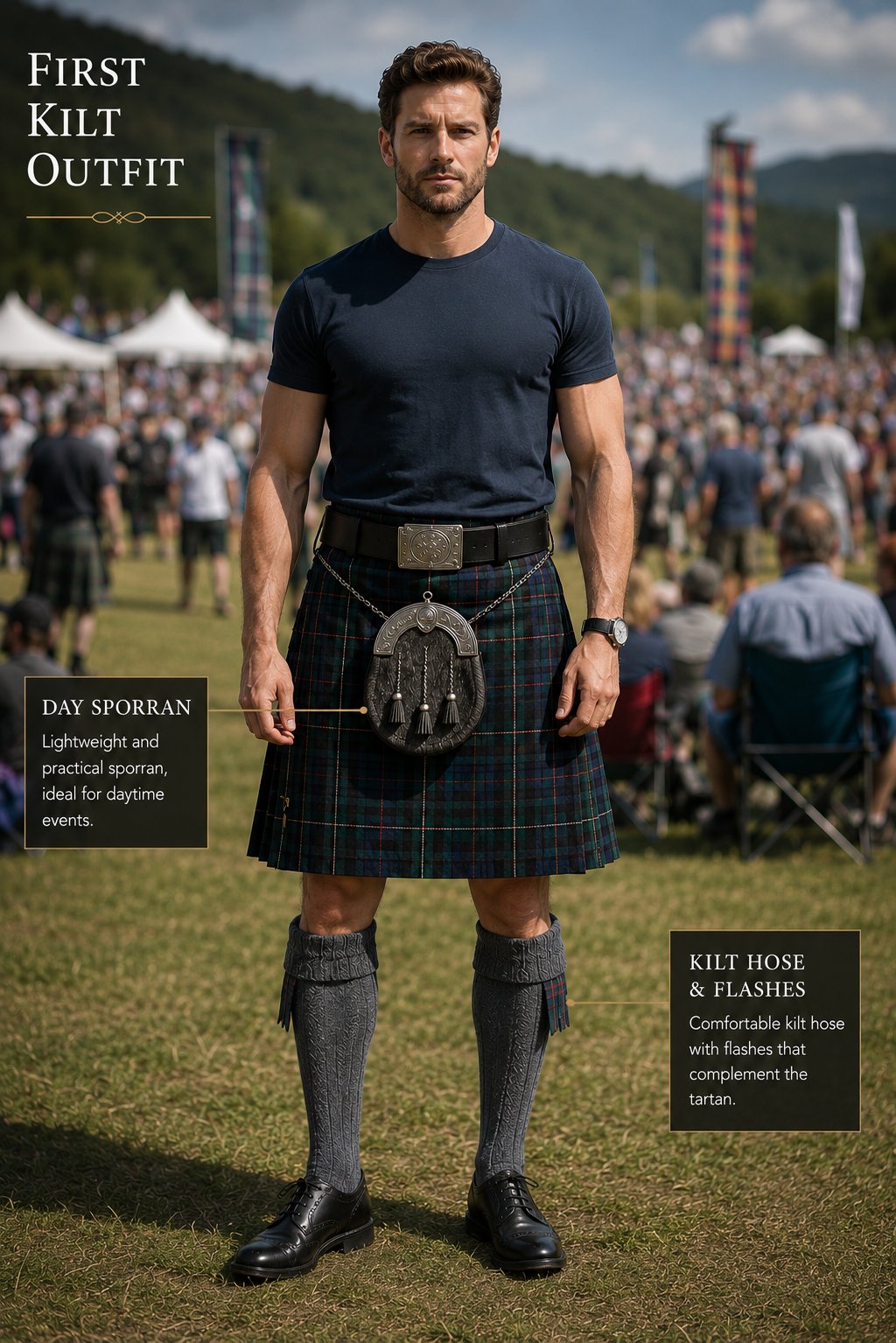
Kit yourself out in Broun/Brown tartan — kilts and outfits, fabric by the metre, plus scarves, ties and sashes, each made to order in your chosen colourway.
ii.
Broun/Brown Tartan for Weddings & Events
For pipe bands, wedding parties and clan events, Broun/Brown tartan can be ordered across kilts, sashes and accessories so everyone matches.
iii.
Colourway Options for Broun/Brown Tartan
Pick the shade that suits you: Modern (rich, bold colour), Ancient (soft, lighter tones), Weathered (faded, natural look) or Dress (brighter, formal). The selector is on every product.
iv.
Bespoke Sizing & Global Delivery
Every Broun/Brown item is made to order and shipped worldwide, with custom sizing and bulk pricing for clan gatherings, weddings and pipe bands. Contact us for help before you order.
v.
Kilts & Highland Outfits in Broun/Brown Tartan
Choose a Broun/Brown kilt on its own or as part of a full outfit. Made-to-measure sizing means a clean fit for grooms, guests, dancers and pipers alike.
vi.
Broun/Brown Tartan Fabric for Makers
Need cloth rather than a finished item? Broun/Brown tartan fabric is sold by the metre for kilts, sashes, furnishings and craft work, with samples available on request.

Clan Motto
Floreat Majestas
Heritage & Identity
Who Wears Broun/Brown Tartan Tartan?
Worn by Broun and Brown descendants globally, sept families including Brownlee, Burnett, and Brunton bearers, Scottish heritage enthusiasts, and clan society members across North America and Britain.
Associated Names
Brown
Browne
Broun
Brune
Bruno
Brownlee
Brownlie
Browning
Brownson
Brunton
Burnett
MacBrown
McBrown
Le Brun
De Broun
Brounflet
Brounhill
Brounrig
Brounmuir
Brounlands
Military Heritage
Associated Regiments
Broun warriors served with valor in Border regiments, Lowland forces, and colonial units, particularly distinguished in American frontier campaigns and Canadian military service throughout the Empire's expansion.
King's Own Scottish Borderers
Royal Scots
Cameronians (Scottish Rifles)
Highland Light Infantry
Black Watch (Canada)
Queen's Own Cameron Highlanders of Canada
Royal Regiment of Canada
Argyll and Sutherland Highlanders of Canada
Shop Broun/Brown Tartan Products
Discover authentic Broun clan heritage products including traditional Highland kilts, Border dress accessories, clan badges, tartan scarves, ceremonial ties, and family crest items for North American and British descendants.
All Categories
All Styles
All Products
All Prices
Under $50
$50 - $100
$100 - $200
$200 - $500
$500+
Associated Tartans
Your Selected Tartan
Other Associated Tartans
Broun/Brown Tartan Tartans
0 Variations
Each tartan can feature several variations, with the most common being Ancient, Modern, Weathered, Hunting and Dress.
Loading tartans…
Ancient Tartan
Before 1860, all fabric dyes came from nature — plants, berries, bark, and insects. The colours they produced were softer and more muted than what we're used to today: think mossy greens, dusty sky blues, and reds with a warm, orangey tone. A lot of people actually prefer Ancient tartans for this reason — the gentler contrasts let the pattern breathe and stand out in a way that bolder colours sometimes don't. Worth knowing: the pattern itself, called the sett, is exactly the same across all variations of a tartan. It's only the colours that change.
Modern Tartan
Modern tartans came about after 1860, when chemical dyes replaced natural ones. The difference is pretty striking. Those soft, earthy greens became deep bottle green. Pale blues turned into rich navy. Reds went from warm and muted to full-on scarlet. If you're after something bold and vivid, Modern is usually the one to go for. It's the version most people picture when they think of a classic tartan.
Weathered Tartan
Weathered tartans take their inspiration from what happens to fabric left out in the elements — faded by sun, softened by rain, worn in by time. The colours shift towards olive greens, warm browns, and very pale blues, with reds that fade down to something close to a dusty pink. It's a more rustic, lived-in look, and honestly a really beautiful one. If you want something that feels a little more understated and natural, Weathered is worth a look.
Hunting Tartan
Hunting tartans are essentially the camouflage version of a clan's tartan — greens and browns brought forward so the wearer could move through the landscape without standing out. Not every clan has one, and that's by design. If a tartan is already mostly green or brown (like the Black Watch or Gunn), there's no need to adapt it. But a tartan like the Fraser, which is predominantly red, would make someone very easy to spot in the field — so a Hunting version makes a lot of sense for clans like that.
Dress Tartan
Dress tartans were made for the big occasions — Highland games, celebrations, and traditional dance. The pattern stays the same, but the main colour is swapped out for white, or extra white is woven in to give it a lighter, more formal feel. As you'd expect from the Scots, the rules get bent every now and then — yellow has been used instead of white in some cases, which is exactly how the famously bold MacLeod Dress Modern and Barclay Dress Modern came to be.
The Broun/Brown Tartan Story
Four centuries of history woven into every thread
The Broun clan holds the distinction of being Scotland's earliest documented family, tracing origins to Sir David le Brun who arrived with Norman settlers around 1126. King David I granted the family extensive Border lands, establishing their seat at Colstoun in East Lothian. The Brouns quickly integrated into Scottish society, serving as sheriffs, justiciars, and royal advisors. Their strategic Border location made them crucial defenders against English incursions, while their Norman military expertise proved invaluable to Scottish kings. Early clan chiefs married into established Scottish families, cementing their position among Scotland's most influential nobles and creating lasting alliances.
During the Wars of Scottish Independence, the Brouns demonstrated unwavering loyalty to Scottish freedom under Robert the Bruce. Sir David de Broun signed the Declaration of Arbroath in 1320, affirming Scotland's independence alongside fellow nobles. The family's Border strongholds became crucial staging points for Scottish resistance, while clan warriors fought at Bannockburn and other decisive battles. Throughout the 14th century, successive Broun chiefs expanded their influence through strategic marriages and royal service, establishing cadet branches across southern Scotland. The clan weathered English raids and Border conflicts while maintaining their ancient seat at Colstoun.
Where does the name Broun/Brown Tartan come from?
Broun derives from the Norman-French 'le Brun' meaning 'the brown one,' referring to dark hair or complexion. The name arrived in Scotland with Norman settlers in the 12th century, establishing the earliest recorded clan in Scottish history. Sir David le Brun received lands from David I around 1126, founding the house of Broun. This surname became deeply rooted in Scottish Border culture, evolving into various spellings while maintaining its ancient Norman heritage.
The 15th and 16th centuries saw Broun power reach its zenith under Sir George Broun of Colstoun, who served as Sheriff of Edinburgh and acquired vast estates across East Lothian. The family built impressive tower houses and established themselves as leading Border lairds, commanding respect from both Scottish and English nobles. During the Reformation, the Brouns embraced Protestantism while preserving their ancient traditions and feudal authority. Clan members served as diplomats between Scottish and English courts, their Border expertise proving invaluable during turbulent Anglo-Scottish relations. The family's scholarly pursuits led to notable achievements in law, medicine, and literature throughout this golden age.
The 17th and 18th centuries brought new challenges as Brouns adapted to Union with England while maintaining their Scottish identity. Many clan members emigrated to North America, establishing Broun settlements in Virginia, Pennsylvania, and Nova Scotia. In Scotland, the family continued their Border traditions while embracing Enlightenment ideals, producing distinguished physicians, lawyers, and merchants. During Jacobite uprisings, most Brouns remained loyal to the Crown, though some branches supported Stuart claims. The clan's military traditions continued through service in Highland regiments and colonial forces, particularly during American frontier conflicts and Canadian development.
The Broun tartan carries the legacy of Scotland's earliest recorded clan, from ancient Lowland castles to North American settlements, worn proudly by descendants worldwide.
Featured Collections
Craftsmanship defined by tradition, designed for the modern era.