Ghillie Brogues – Scottish Kilt

3 Styles · 5000+ Tartans

Ghillie Brogues

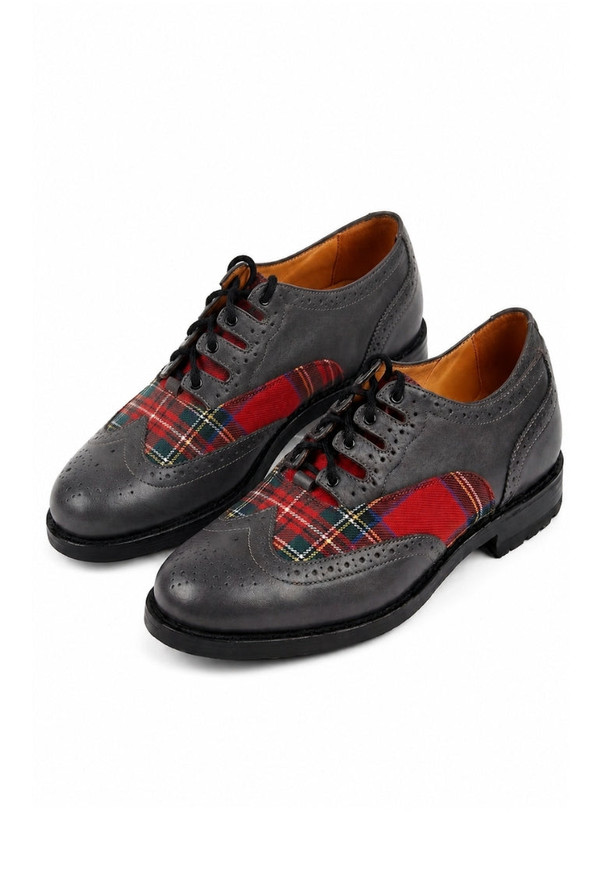
Ghillie brogues in genuine leather with no tongue and long laces that cross the instep, wrap the ankle and tie below the calf. The open lacing and missing tongue are practical in origin, since both let water drain out on wet ground, and both survived into formal wear. The traditional shoe for a kilt outfit, in black and brown, with leather or hard wearing composite soles. Soles are leather or hard wearing composite. Leather is the traditional choice and looks correct with formal dress but wears faster on wet ground. Composite grips better and lasts longer, which matters if you are standing outdoors at a games day or a ceremony. Order your usual shoe size, since the open lacing accommodates a wider range of foot shapes than a laced Oxford does.

About this collection

Ghillie Brogues for Kilt Outfits

Everything unusual about a ghillie brogue was once functional. The missing tongue let water run out rather than pooling. The long laces tied above the ankle kept the shoe on crossing bog and heather. The brogueing itself, those punched holes, allowed water through the leather. None of it was decoration.

Tying them is the part people get wrong. Cross the laces over the instep, wrap twice around the ankle above the bone, then tie at the front or the outside and tuck the ends in. Never tie at the back, where the knot digs in the moment you sit down.

Break them in indoors over the fortnight before an event, wearing the hose you intend to wear on the day. They are stiff for the first two or three wearings and then soften considerably. See kilt hose and flashes for what goes underneath.

Ghillie Brogues

Showing all 4 products
★★★★★
Loading reviews…
5★
4★
3★
2★
1★

Shop by Inspiration

Made to Measure. Made to Last.

Each piece is expertly tailored, carefully finished and fitted to perfection, honouring Scotland's rich tailoring tradition.

Common questions

Frequently asked questions

Traditional Scottish shoes worn with a kilt, with no tongue and long laces that cross over the instep, wrap around the ankle and tie below the calf. The brogueing is the pattern of punched holes across the leather. They are the correct shoe for formal Highland dress and the most recognisable part of the outfit below the knee.

The open lacing let water drain out and dry quickly when crossing wet ground, and the long laces tied above the ankle kept the shoes on in bog and heather. Both are practical origins that survived into formal wear. The design is functional history rather than decoration, which is why it never got simplified.

For casual and daytime wear, yes, and plain black leather shoes or boots look perfectly correct. For a formal evening, a wedding or a Burns supper, ghillie brogues are what the outfit expects and their absence is noticed. If you own one pair of Highland shoes, this is the pair to own.

Cross the laces over the instep, wrap them twice around the ankle above the bone, then tie at the front or the outside and tuck the ends in. Do not tie at the back, where the knot digs in when you sit. Keep both legs symmetrical and the wrap at the same height, since the difference shows when standing.

Order your normal shoe size. The lacing gives some adjustment over the instep, so they accommodate a range of foot shapes better than a laced Oxford does. They are stiff for the first two or three wearings and then soften considerably. Wear them in before a wedding rather than opening the box on the morning.

Genuine leather uppers with leather or hard wearing composite soles. Polish with a neutral or matching cream rather than a heavy wax, since brogueing holds polish in the punched holes and shows it as white residue. Stuff with paper after wear to hold shape, and never dry them near direct heat.

Wrap them twice around the ankle rather than once, keep the wrap above the ankle bone, and finish with a double knot tucked in behind the wrap. Laces come loose most often because the first wrap sits too low and slides. Do not tie them so tight that the instep swells against them by midnight.

Yes, that is what the open lacing was originally for, since water drains out rather than pooling. Dry them slowly at room temperature afterwards, stuffed with paper, and never near a radiator. Polish once fully dry. Leather soles will wear faster on wet ground than a composite sole will. Wear them with kilt hose and flashes rather than ordinary socks.

Behind the bench

Inside the workshop we own

One minute with the makers who cut, pleat and stitch every order. No racks of standard sizes, because there is nothing to stock.

1 minute · Filmed on the workshop floor · 24,000+ views